The Doctors Migration: From Armenia to Europe
Higher salaries and professional growth
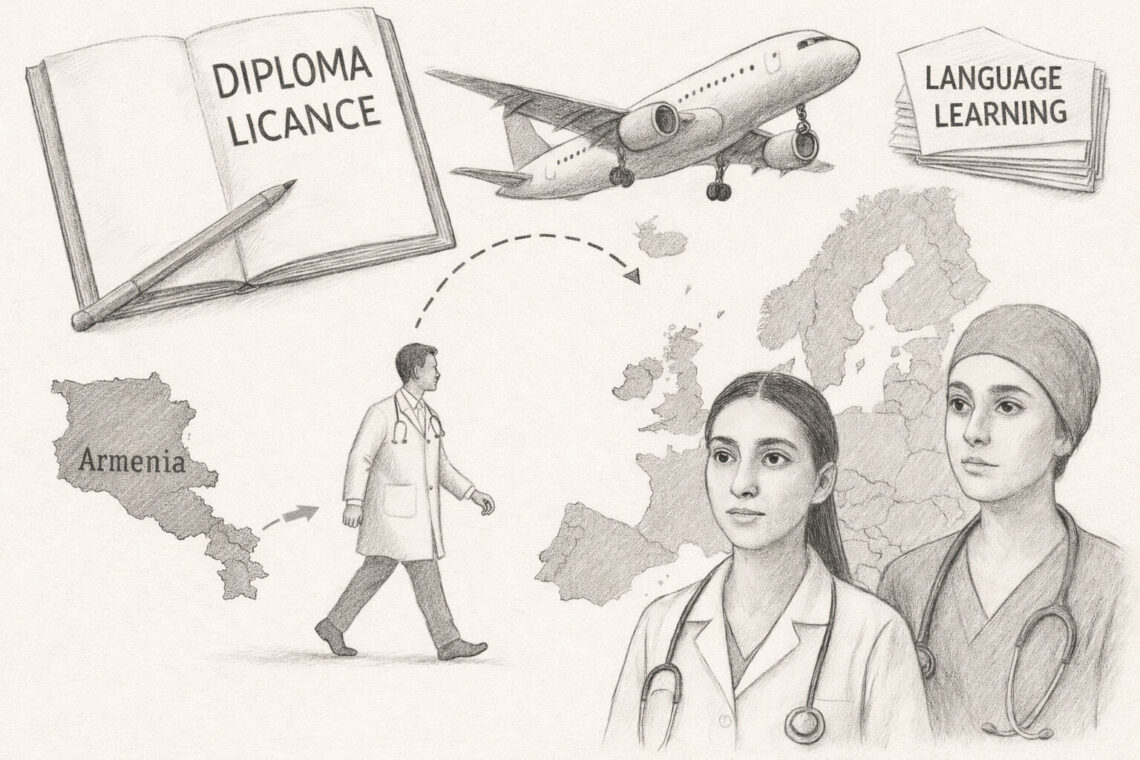
These are the two main reasons for packing suitcases, translating documents, and being ready to start over.
At first glance, the path may seem straightforward — you hold the most in-demand professional qualification: a medical degree. But no matter how much experience you’ve gained in Armenia, the road to working in European hospitals is complex, lengthy, and involves a long chain of exams and verifications that must be completed step by step.
Language and Homesickness: If You Overcome That, You Can Come
The most difficult part is the language. If you know the language, you’ve already overcome 85 percent of everything,” says physician Karmen Gevorgyan. She has been working at one of Germany’s hospitals for three years now and recalls a process that took years.
“It was very difficult. In Armenia, I was working in several places with a heavy workload, and I started learning German from scratch. You have to be ready to attend classes every morning or evening. I would go to German classes in the morning, then work at several jobs, sometimes do night shifts, and then at 7 a.m. go back to class again.”
It took the laboratory physician two years to successfully pass the German B2-level language exam. Then the next stage began—finding a hospital willing to accept her. But that was not the end of the process. Although Karmen Gevorgyan had 10 years of professional experience, she still had to prove and validate her diploma in Germany.
“We submit our documents to the Federal Ministry of Health of Germany, and then to the Ministry of Education. They review our diploma, the list of subjects studied, and the number of hours, and compare them with the standards accepted in their country. If there are gaps, they must be filled. For example, if you studied surgery for 50 hours, but their requirement is 60 hours, you have to make up that difference—either by studying and passing an exam, or by working in a hospital and filling the gap in practice. Until your diploma is recognized (licensed), you can work under a physician’s supervision and wait,” the doctor notes.
The waiting period can be long. If a few years ago this process took 3–6 months, now it can last up to two years. The reason is the large number of applicants. People are coming not only from Armenia but also from many other countries; many are attracted by the salary and the working conditions.

“Now I work part-time, and compared to Armenia I earn three times more. No one forces you—you can choose to work extra and get paid accordingly. In Armenia, I worked for days, stayed on duty, and earned amounts that were honestly laughable,” the doctor recalls.
Another important issue that drives doctors toward European countries is professional growth and stability. In Karmen Gevorgyan’s circle, those under the age of 40 aspire to relocate and find work abroad.
“In Armenia, if they want to find a job, they will—but the question is whether the salary will satisfy doctors. I knew an endocrinologist who had just graduated from university and couldn’t find a job at first. Later she did, but she was earning 5,000 drams a month. Although she now holds a good position, it took more than 10 years to get there. That’s why no new graduate wants to wait for years. Here it’s easier: they may struggle a bit at work, but within at most three years they will see results.
There are psychologically difficult moments. Although we Armenians adapt quickly, I don’t think anyone would break down here—the only real hardship can be the language and homesickness.”
Europe needs 1.2 million doctors, nurses, and midwives.
According to World Health Organization (WHO) data, in 2022 EU countries faced a shortage of 1.2 million healthcare workers. If no measures are taken, this number could reach 4.1 million by 2030.
The main reasons include:
1. Aging population — Due to demographic changes in Europe, it is projected that by 2050 the share of people aged 65 and older in EU countries will increase from 21% in 2023 to 29%. Life expectancy in the EU has reached approximately 81.5 years, yet more than half of the last 20 years of life are spent living with chronic diseases.
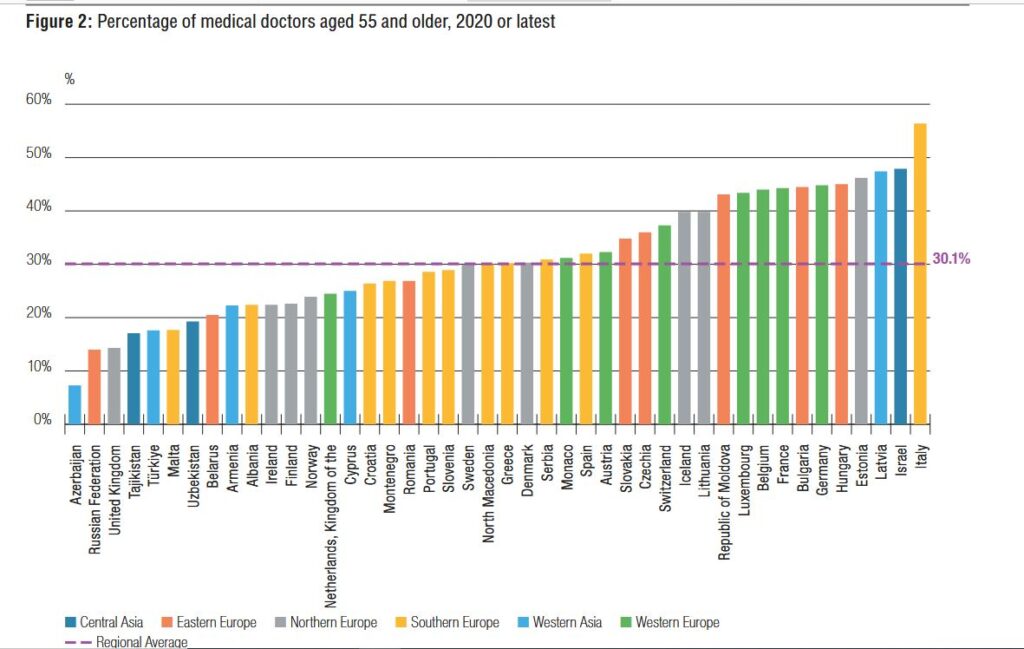
2. An aging healthcare workforce — In the EU, more than one third of doctors and one quarter of nurses are over the age of 55 and will naturally retire in the coming years. At the same time, interest in healthcare careers among young people is declining. The chart shows how large the share of senior doctors is in countries such as Italy and Israel. When young professionals fail to replenish the system, within a few years thousands of physician positions will remain vacant.
To compensate for the shortage and stabilize their healthcare systems, EU countries recruit specialists from other states. For example, in Germany the gap is filled by doctors and nurses from Syria, Romania, Australia, Greece, Russia, Turkey, and CIS countries. According to 2023 data, 558,000 foreign doctors are working in Germany.
This number increases every year. While in 2013 around 30,000 foreign doctors began working in the Federal Republic of Germany, in 2023 alone the figure reached 65,000 within a single year.
Germany is a top destination for Armenian doctors
During the preparation of the article, we managed to establish contact with several Armenian doctors working in various European countries. Standards and requirements differ: in some countries, the diploma of Yerevan State Medical University may not be recognized at all, while in others it is partially accepted, with requirements for additional education and examinations.
“In Belgium, our diplomas are not recognized,” says physician Anna Balbabyan. “I came here 20 years ago. Belgium is a trilingual country, and you need to know German, French, or Dutch in order to study and then work. After passing the language exam, they provide a list of universities where you can continue your education. I started my studies here from the second year. In Germany and France, however, our diplomas are recognized—you can work and fill in any gaps along the way.”
In Italy as well, the recognition of Armenian diplomas and finding employment remains a challenge.
Although Yerevan State Medical University named after Mkhitar Heratsi is a member of a number of international organizations and some of its master’s programs undergo international accreditation, the university declined to provide clarifications on this issue.
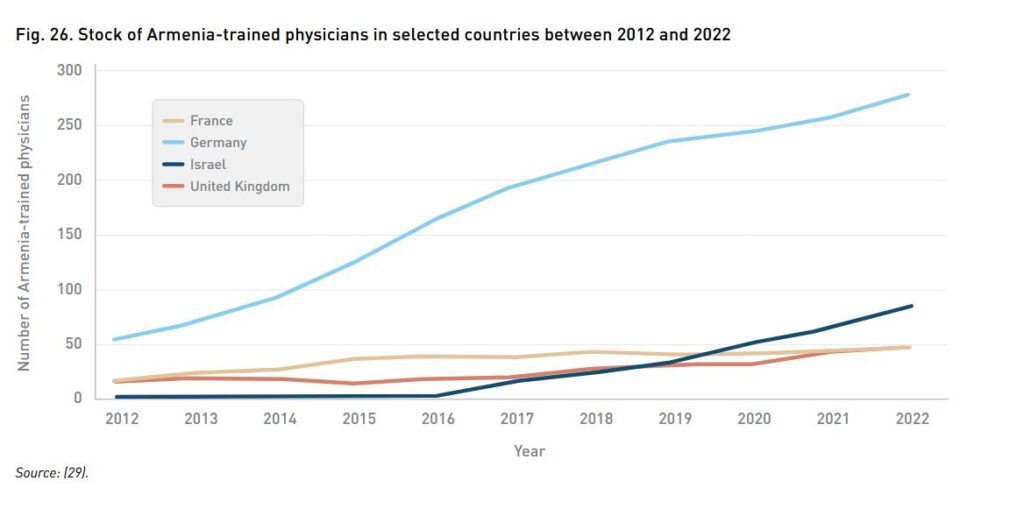
According to data from the World Health Organization, Germany is the primary destination for Armenian doctors, largely due to the recognition of medical diplomas and comparatively easier access to employment.
Legal migration with attractive opportunities
“Max Work” has been operating in Armenia for 12 years, helping people find work abroad legally and organizing cultural exchange programs with various countries.
In recent years, German programs have become more active. Partners provide funding for nurses: free German language training, professional retraining, coverage of travel expenses, and one year of free accommodation in Germany.
“Five years ago, such funding didn’t exist. If someone wanted to work abroad, they had to handle everything on their own. In Germany, the shortage of healthcare staff isn’t being met automatically—the state provides grants to facilitate the relocation of specialists and their professional activity,” says Gor Abgaryan, director of Max Work.
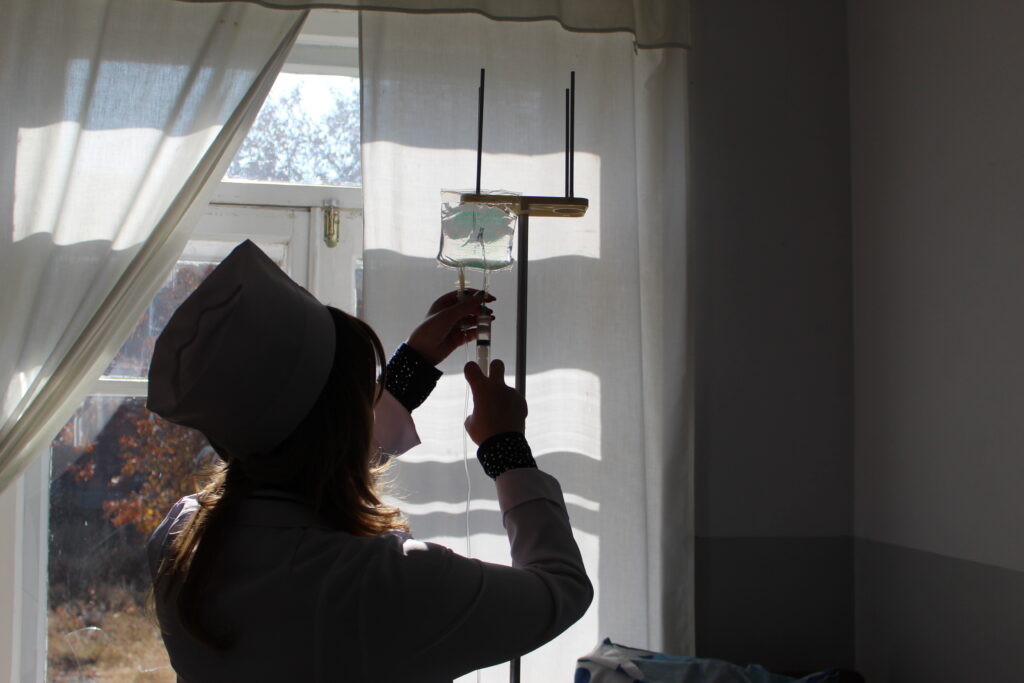
One of the mandatory requirements is that the diploma must specify nursing, and applicants must overcome the challenges of language training. Many people apply, and often the desire is strong, but few manage to achieve the goal. Combining 12-hour shifts, night duties, and language classes can be very demanding. Some give up halfway, some fail the exam multiple times and become discouraged, while others successfully complete all stages and are now working in Germany.
“After 2020, many wanted to leave the country. Various fake organizations appeared, there was a lot of fraud, and people became afraid—they didn’t know whom to trust. There is also a lack of media literacy; people cannot search properly, separate reliable organizations from unreliable ones, and end up falling into traps. They lose money and trust no one. Even when we say that everything is free, they immediately suspect something is wrong,” adds Gor Abgaryan, also commenting on illegal migration and lack of awareness.
“We have had people contact us who have nursing diplomas, know German, and went to Germany to ‘turn themselves in.’ Imagine—they could have gone legally, with a diploma, official permission, and one year of accommodation. But instead, they go illegally, in uncertain conditions, constantly fearing deportation. Our partners cannot assist those who have ‘turned themselves in’ seeking refugee status. They must return to Armenia, apply through the embassy again, and repeat the process. Yet when we mention returning, they refuse sharply. For them, it is ‘better’ to stay illegally, paying lawyers for ten years, than to go legally and work,” says Gor Abgaryan.
The Uneven Healthcare Map of Armenia
Despite the outflow of young doctors, Armenia lacks precise statistics to assess the scale and consequences of professional migration.
On one hand, young doctors complain that finding employment is difficult, as the sector is overloaded and, in many cases, professional connections—rather than knowledge—determine career opportunities. On the other hand, the Ministry of Health of Armenia publishes reports on workforce needs and vacant positions.
One of the main reasons for this situation is the uneven distribution of specialists. According to the National Institute of Health, in 2023, Armenia had 13,000 doctors (including dentists) and 16,500 mid-level medical staff. The table below provides a more visual representation of the healthcare sector’s distribution.
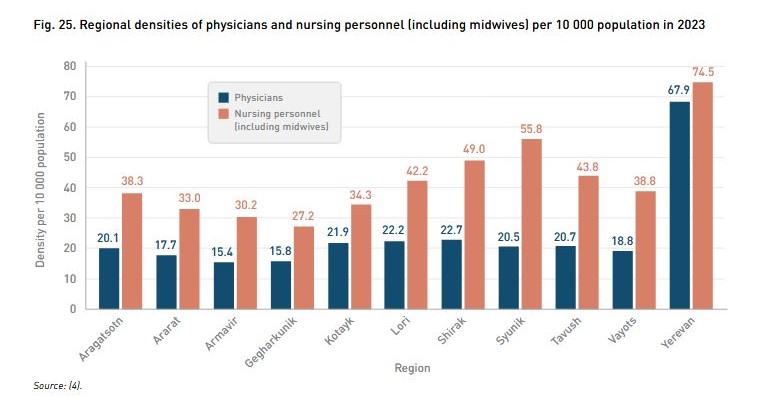
If in Yerevan up to 67 doctors serve 10,000 residents, in the regions the number is four times lower, making it difficult for residents outside the capital to access quality healthcare services. Depending on social and economic conditions, not everyone can reach Yerevan for treatment.
During our conversation, Anna Balbabyan, an Armenian doctor working in Belgium, compared the Belgian and Armenian educational and healthcare systems and emphasized the following:
“During their studies, from the second year students are sent to various regions of Belgium to practically develop their skills. They are provided with the necessary conditions to work and gain experience. In Armenia, my practical training at one of the Yerevan hospitals was purely formal. In Belgium, a second-year student works full-time: from 7 a.m., they bathe the patient, change diapers, make the bed, and feed the patient if needed. In the third year, they perform intramuscular injections. The student is fully involved in the process, works 8 hours, and it doesn’t matter which region of the country they are in.
Here, the training instills a mindset that if you have chosen this profession, you must do everything to ensure you will later receive job offers from hospitals, regardless of the hospital’s location. In Armenia, everything is concentrated in Yerevan; the practical training is largely formal. Only after graduation do students gain practical experience by working, or now they even pay extra to work as assistants to gain experience.”
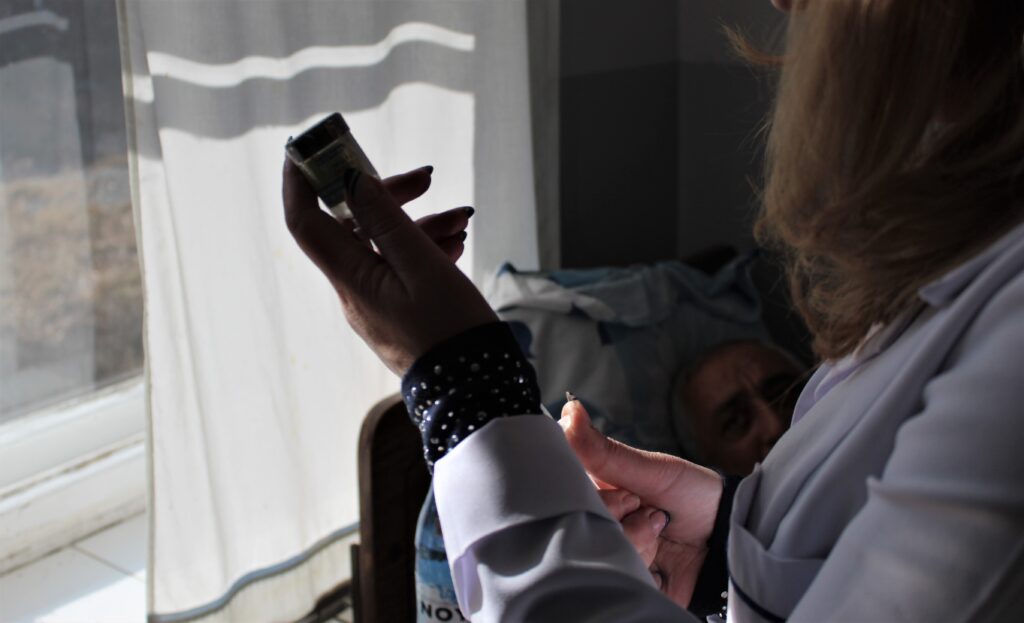
The emigration of young doctors is particularly concerning because it threatens the long-term stability and recovery of the healthcare workforce. Replacing retiring medical staff in the regions with qualified successors is an especially significant challenge.
This issue becomes even more striking when we look at vacant positions. In 2025, regional healthcare institutions—particularly in primary care and anesthesiology—recorded over 300 vacancies, while in Yerevan there were no open positions.
The Ministry of Health points to reforms that have been implemented, but their execution has also revealed systemic problems that require attention. A key conclusion from family medicine reforms is that introducing new systems alone is not enough; it is also necessary to create incentives for specialists to remain in the system. Educational reforms and inclusive retraining programs are also needed.
Retaining the workforce will remain a challenge if Armenia does not balance the situation and support doctors working in the regions—with financial bonuses, housing assistance, professional development opportunities, and more.
For reference, Romania was once among the countries from which up to 1,200 doctors emigrated annually, but reforms have reduced this number threefold.
Anahit Harutyunyan
30․11․2025